

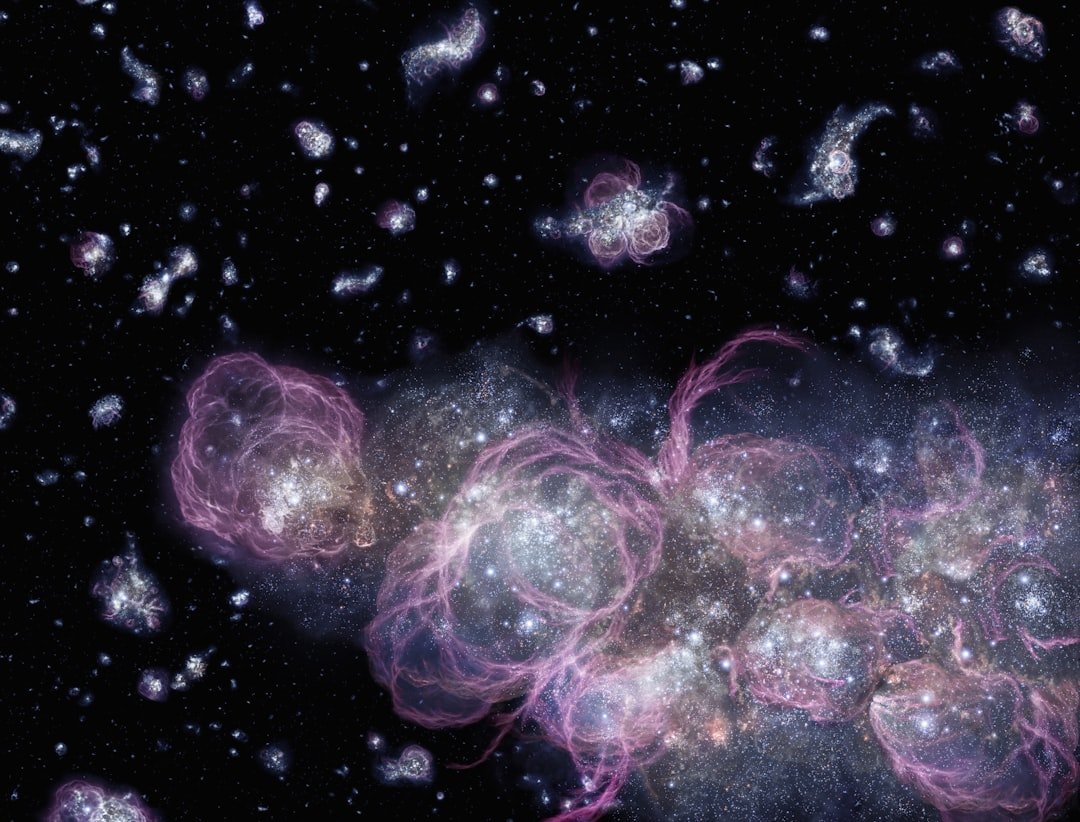
A Cosmic Alignment Unlocks Distant Worlds (Image Credits: Unsplash)
April marks the onset of galaxy season across the Northern Hemisphere, when Earth’s orbital position aligns the night sky away from the Milky Way’s obscuring dust lanes. This window reveals clusters of distant galaxies in stunning clarity, drawing stargazers to constellations rising in the east. Astronomy magazine Editor Emeritus Dave Eicher spotlights exceptional views in Leo, Ursa Major, Coma Berenices, and Virgo, accessible with basic equipment on clear evenings.
A Cosmic Alignment Unlocks Distant Worlds
Observers often overlook how Earth’s journey around the Sun dictates seasonal sky views. During spring, the nightside faces outward from our galaxy’s plane, minimizing interference from stars and gas clouds. This setup exposes nearby galaxy groups, some just tens of millions of light-years distant.
Eicher emphasized this prime opportunity in a recent overview, urging enthusiasts to step outside with binoculars or telescopes. The result transforms ordinary nights into portals to island universes, where spiral arms and stellar nurseries await discovery.
The Leo Triplet Steals the Show
High in the evening sky, Leo hosts one of spring’s most captivating sights: the Leo Triplet. This trio – M65, M66, and NGC 3628 – clusters together roughly 35 million light-years away, fitting neatly into a single low-power telescope field.
Each member displays distinct traits, from smooth spirals to more irregular forms, offering a snapshot of galactic diversity. Binoculars reveal their faint glows against the dark backdrop, while telescopes unveil subtle structures like dust lanes and bright cores.
Ursa Major’s Dynamic Duo
Near the familiar Big Dipper asterism, Ursa Major delivers M81 and M82, paired closely for easy comparison. M81 ranks among the sky’s brightest galaxies at around seventh magnitude, its grand spiral design spanning a wide view.
Neighboring M82 presents a stark contrast as an edge-on starburst galaxy, rife with explosive star formation and chaotic dust. Telescopes capture its irregular shape and hazy extensions, hinting at violent internal processes reshaping the galaxy.
Virgo Cluster’s Galactic Bounty
Stretching into Coma Berenices and Virgo lies the Virgo Cluster, a rich hunting ground packed with hundreds of galaxies. Standouts include the edge-on spiral NGC 4565, whose needle-like profile mimics our Milky Way from afar.
Within Virgo proper, M61, M87, and M100 shine as cluster highlights. Larger instruments reveal their intricate details, from jets in M87 to the grand spirals of M100, underscoring the region’s density of cosmic neighbors.
Essential Gear and Techniques
Success begins with dark sites away from city lights, ideally facing east after twilight. Wide-field binoculars spot brighter targets like M81, while telescopes excel on fainter cluster members.
Eicher recommended versatile setups, such as those from Celestron, for sweeping views. Patience pays off – allow eyes to dark-adapt for 20-30 minutes, then star-hop from constellation patterns.
- Start with Leo’s bright stars to locate the Triplet.
- Use Ursa Major’s Dipper as a pointer to M81/M82.
- Sweep Virgo’s expanse methodically for cluster gems.
- Log sketches or photos to track subtle changes over nights.
- Check apps for exact positions and rising times.
| Galaxy | Constellation | Key Feature |
|---|---|---|
| M65, M66, NGC 3628 | Leo | Triplet group, 35 million light-years |
| M81 | Ursa Major | 7th magnitude spiral |
| M82 | Ursa Major | Edge-on starburst |
| NGC 4565 | Coma Berenices | Edge-on spiral |
| M61, M87, M100 | Virgo | Cluster standouts |
Key Takeaways
- Spring positions the Northern Hemisphere for unobstructed galaxy views.
- Leo Triplet and M81/M82 offer binocular-friendly spectacles.
- Virgo Cluster rewards telescope users with dozens of targets.
These spring galaxies remind us of the universe’s vast architecture, just beyond reach yet intimately observable. As conditions align perfectly this season, grab your gear and connect with the cosmos. What galaxies will you chase first? Share your sightings in the comments.