

There is a region of the universe so massive it is pulling our entire galaxy toward it, and yet we can barely see it. Hidden behind a curtain of dust and stars, the Great Attractor has fascinated astronomers for decades. Now, as repeating radio pulses from deep space grow harder to explain away, a natural question surfaces: could something from that direction be trying to reach us?
The answer, as of 2026, is almost certainly no. What we’re really seeing is something both more complicated and more interesting than a cosmic transmission. The intersection of SETI’s expanding search capabilities, a new generation of repeating radio signals, and the stubborn mystery of the Great Attractor has created a perfect storm of scientific curiosity.
The Great Attractor: A Hidden Giant We Can’t Quite See
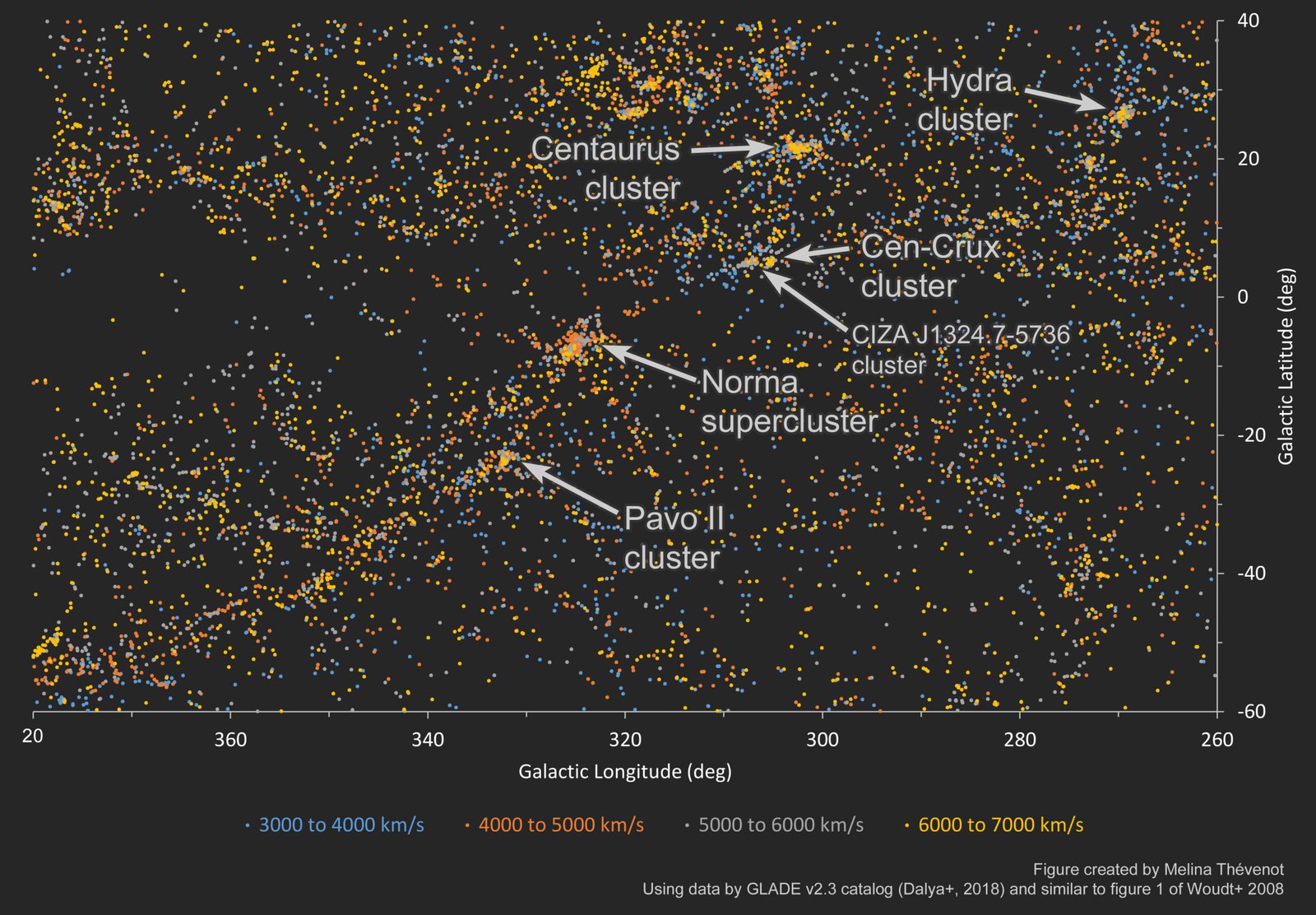
The Great Attractor is situated at a distance of somewhere between 150 and 250 million light-years from the Milky Way, in the direction of the constellations Triangulum Australe and Norma. It isn’t a single object. It’s more accurately described as a gravitational focal point, a region where the collective mass of countless galaxies and dark matter conspires to drag our local neighborhood through space.
While objects in that direction lie in the Zone of Avoidance and are difficult to study with visible wavelengths, X-ray observations have revealed that region to be dominated by the Norma Cluster, a massive cluster of galaxies containing a preponderance of large, old galaxies, many of which are colliding with their neighbors and radiating large amounts of radio waves.
The physical structure identified as the most likely heart of the Great Attractor is Abell 3627, commonly called the Norma Cluster. It sits approximately 220 million light-years from the Milky Way, embedded in the Zone of Avoidance, and is among the most massive nearby galaxy clusters known to astronomy.
The Zone of Avoidance: Why This Region Remains Hard to Study
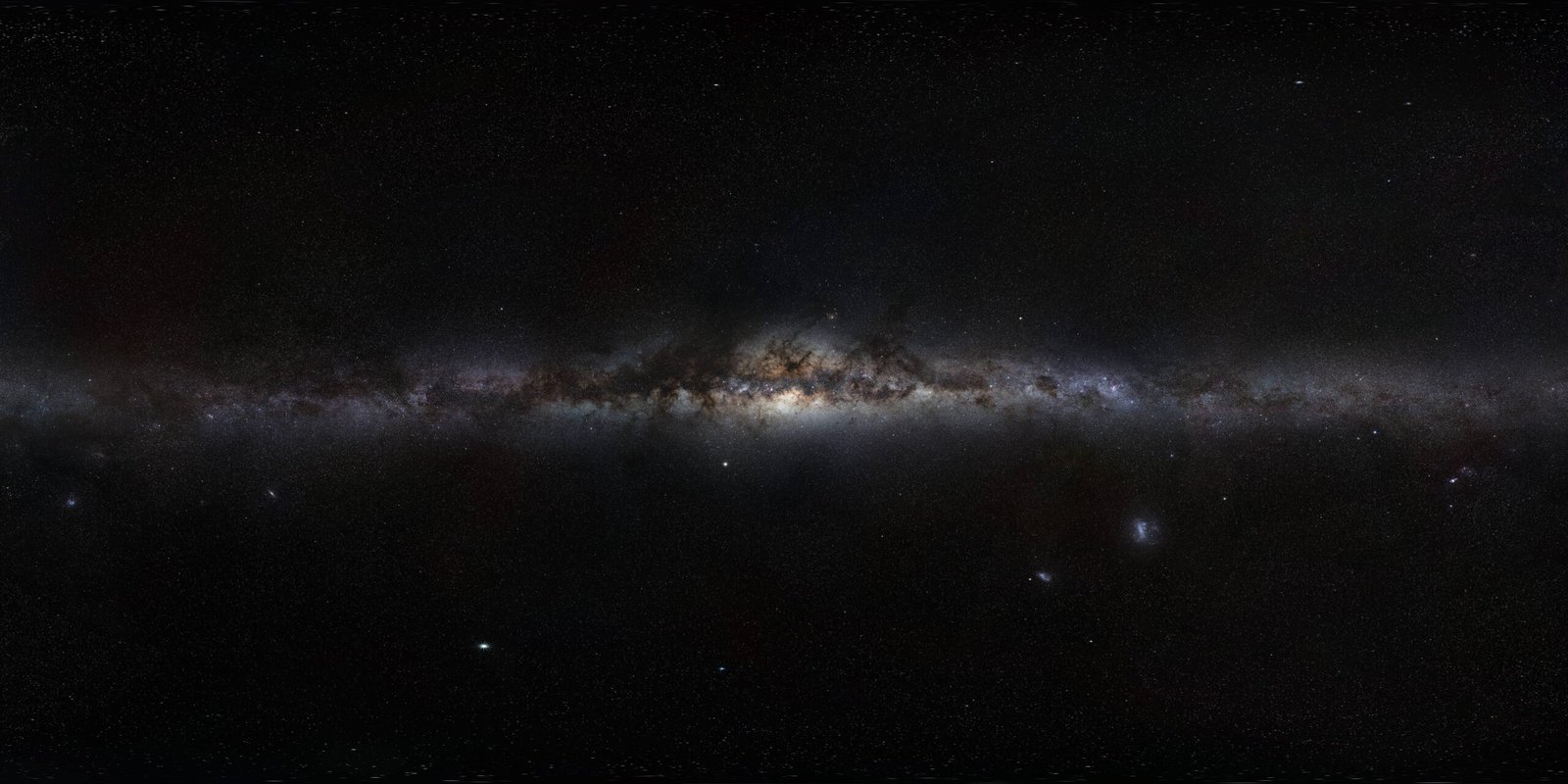
The Great Attractor’s visibility is thwarted by the Milky Way’s own galactic plane, a band of stars, gas, and dust that blocks about 20% of the extragalactic sky, known as the Zone of Avoidance. This is the fundamental problem. We know something enormous is out there, pulling us toward it, but the very structure of our own galaxy gets in the way.
The gas and dust block our view in visible telescopes, but other wavelengths like radio and infrared can pierce it to see what’s on the other side. Astronomers have made real progress using these alternative methods. The telescope resources being applied to the Great Attractor region have improved dramatically over the past decade. The eROSITA X-ray telescope, launched in July 2019, completed its first all-sky X-ray survey in 2020, and is roughly 25 times more sensitive to extended X-ray sources than its predecessor ROSAT, meaning galaxy clusters that were previously too faint or too close to the galactic plane to detect are now within reach.
Recent 2025 analyses using WALLABY radio data detect hydrogen gas signatures, hinting at roughly a quarter more galaxies than previously cataloged in the region, yet uncertainties persist in velocity assignments. The picture is slowly sharpening, though many details remain unresolved.
Fast Radio Bursts: The Real Signals Driving the Story
Fast radio bursts are bright, unresolved, broadband, millisecond flashes found in parts of the sky. Unlike many radio sources, the signal from a burst is detected in a short period of time with enough strength to stand out from the noise floor. The burst usually appears as a single spike of energy, and these bursts last for several milliseconds. They are among the most energetic single events ever recorded in radio astronomy.
Astronomers estimate the average FRB releases as much energy in a millisecond as the Sun puts out in three days. That’s not a subtle signal. It’s an extraordinary outpouring of energy from a point source, and detecting it from hundreds of millions of light-years away still requires our most sensitive instruments.
The Second CHIME/FRB Catalog contains over 4,500 bursts detected between July 2018 and September 2023 at 400–800 MHz. The pace of discovery has been remarkable. There seem to be two types of bursts: those that repeat and those that occur only once. It is the repeating kind that catches people’s attention most.
The Repeater Problem: When a Signal Comes Back
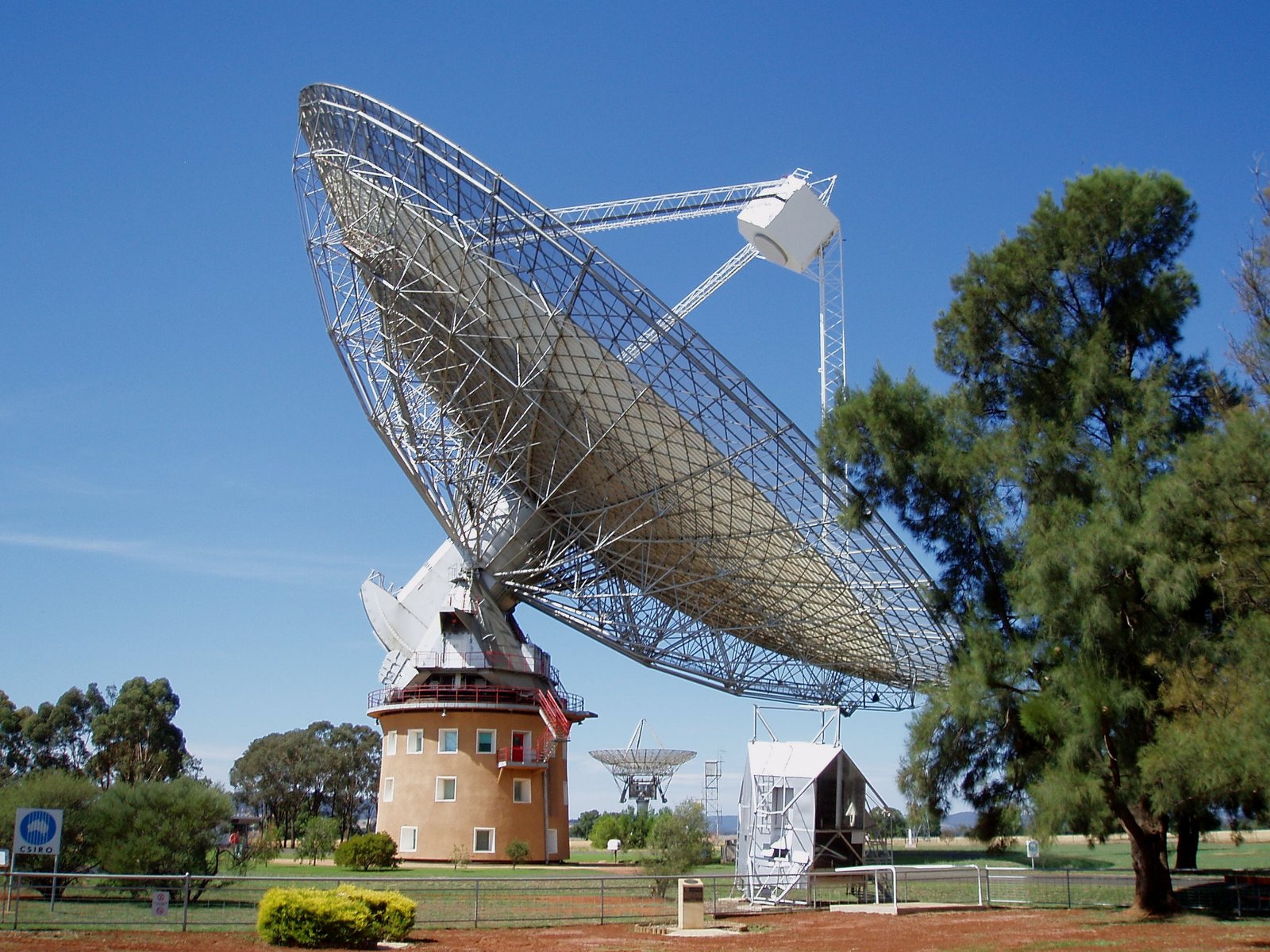
The differences between repeating and non-repeating sources leave open the possibility that the two types of bursts may originate from different sources. The nature of repeating sources rules out cataclysmic scenarios such as neutron star mergers, but some of these might be possible for a non-repeating source. A signal that returns from the same point in space carries more information, and more intrigue.
Discovered in March 2025 by the CHIME Outrigger array, FRB 20250316A is one of the brightest fast radio bursts ever observed. The CHIME collaboration traced the burst to the galaxy NGC 4141, 130 million light-years from Earth, and locked in on the source’s position with a precision of just 42 light-years. That kind of localization precision is genuinely new territory. It turns a mystery signal into a known address.
The origins of fast radio bursts, despite several thousand bursts having been cataloged, remain mysterious. Among the many questions that remain is whether one-off bursts and repeating bursts arise from the same population of objects, or if they have entirely different origins. The community is actively debating this, and the answer will shape how researchers interpret every future detection.
Magnetars: The Most Likely Culprit
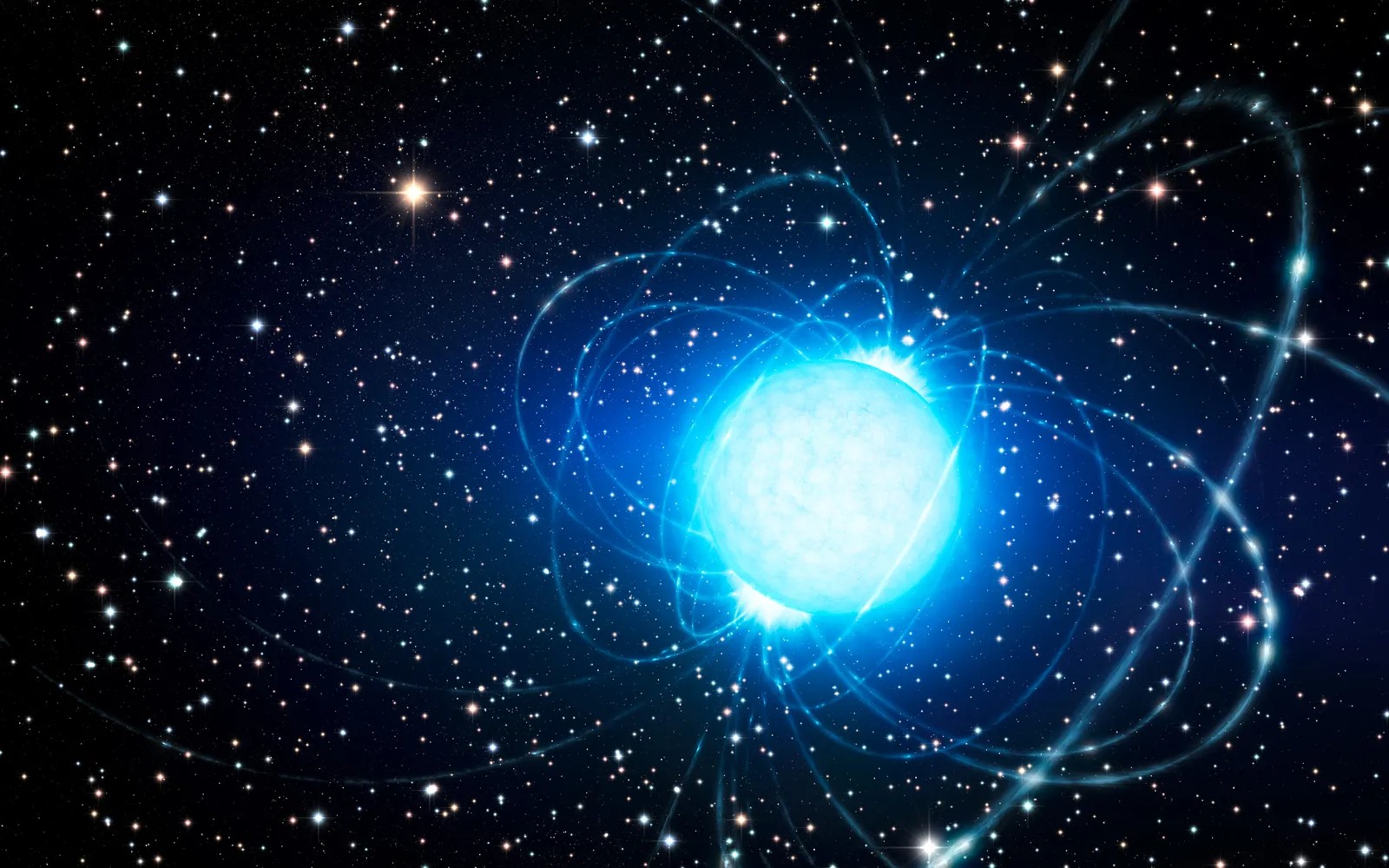
The first FRB detected inside the Milky Way was the first ever to be linked to a known source. That link strongly supports the idea that fast radio bursts emanate from magnetars. Magnetars are neutron stars with extraordinarily intense magnetic fields, and when their crusts fracture or their magnetic structures reorganize, they release enormous bursts of radio energy.
The authors of a 2025 study concluded that the properties of FRB 20201124A suggest that it is a magnetar embedded in a dynamic plasma environment. This is the current scientific consensus: most repeating FRBs are produced not by anything communicating, but by the violent physics of dead stellar cores. Confirmed fast radio bursts number in the hundreds, and scientists have assembled mounting evidence for what triggers them: highly magnetized neutron stars known as magnetars.
At least some fast radio bursts come from magnetars, the rapidly spinning, intensely magnetized remnants of certain massive stars. However, it’s still not known whether all fast radio bursts share this origin, or if their varied behaviors can be traced to equally varied origins. The magnetar model is compelling, but it hasn’t closed every door.
SETI’s Expanding Toolkit: AI Enters the Search
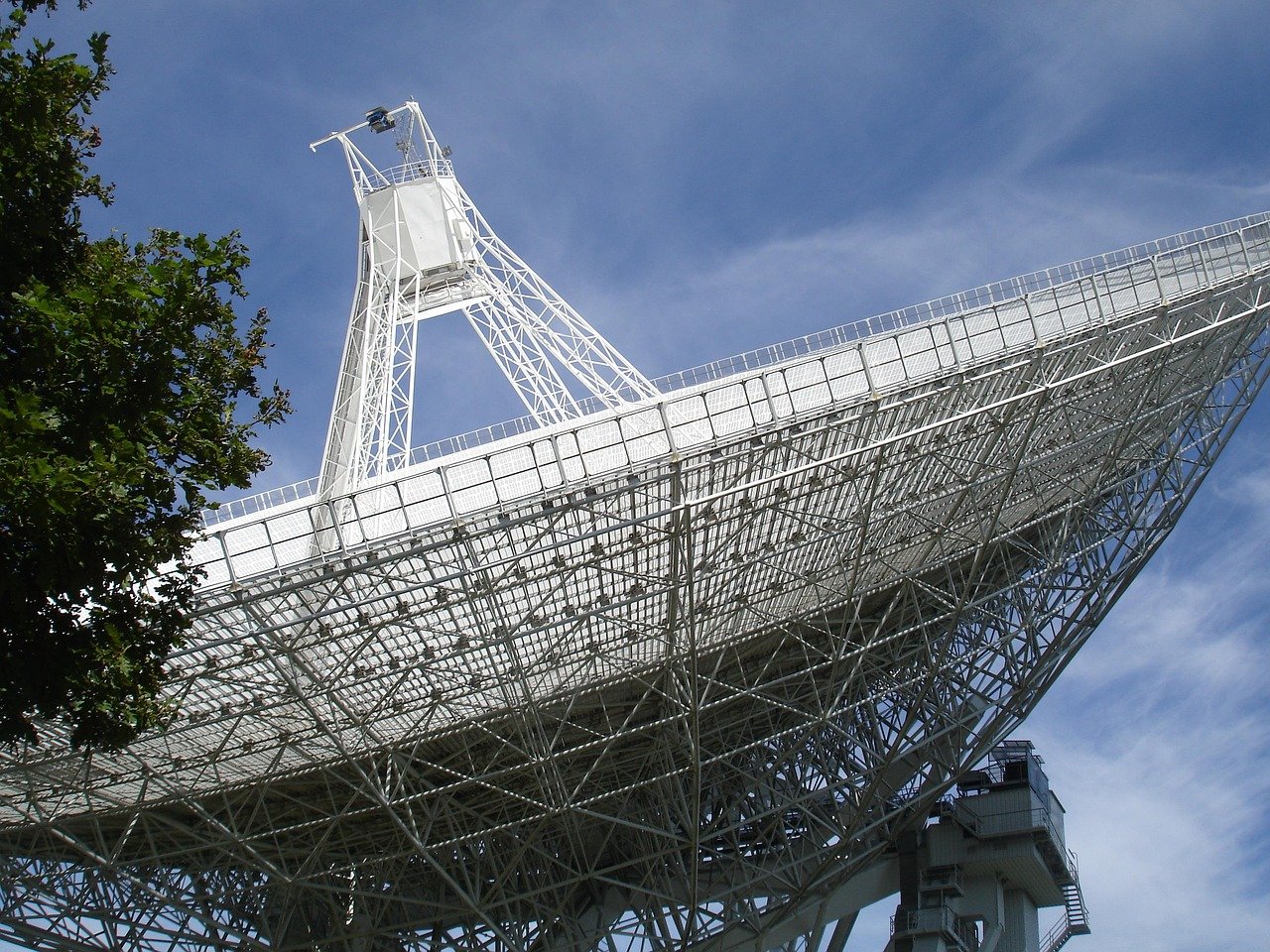
SETI encompasses diverse efforts and scientific projects intended to detect extraterrestrial signals, or any evidence of intelligent life beyond Earth. Researchers use methods such as monitoring electromagnetic radiation, searching for optical signals, and investigating potential extraterrestrial artifacts for any signs of transmission from civilizations present on other planets. The ambition hasn’t changed. The tools, though, are barely recognizable from even a decade ago.
The SETI team used NVIDIA GPUs and a bespoke neural network to process gigabits of radio data in real-time, discarding irrelevant data and pulling out potentially coherent patterns, and hopes to use this method to identify other patterns from deep space signals. Real-time AI screening changes everything about how unusual signals are flagged and prioritized. Where human analysts once sifted through data weeks later, anomalies now surface in seconds.
Using 42 different but synchronized antennas located at the Allen Telescope Array in Hat Creek, California, the SETI team identified radio signals emitted by a pulsar nestled in the Crab Nebula, which lies about 6,500 light years from Earth. That was essentially a proof-of-concept run. Rather than having to wait and sift through massive amounts of data looking for potentially coherent patterns, the AI screens the raw-sensor data in real-time, discarding most of it as irrelevant but also pulling out data that could be evidence of interstellar communication.
No Confirmed Signals: What the Data Actually Shows
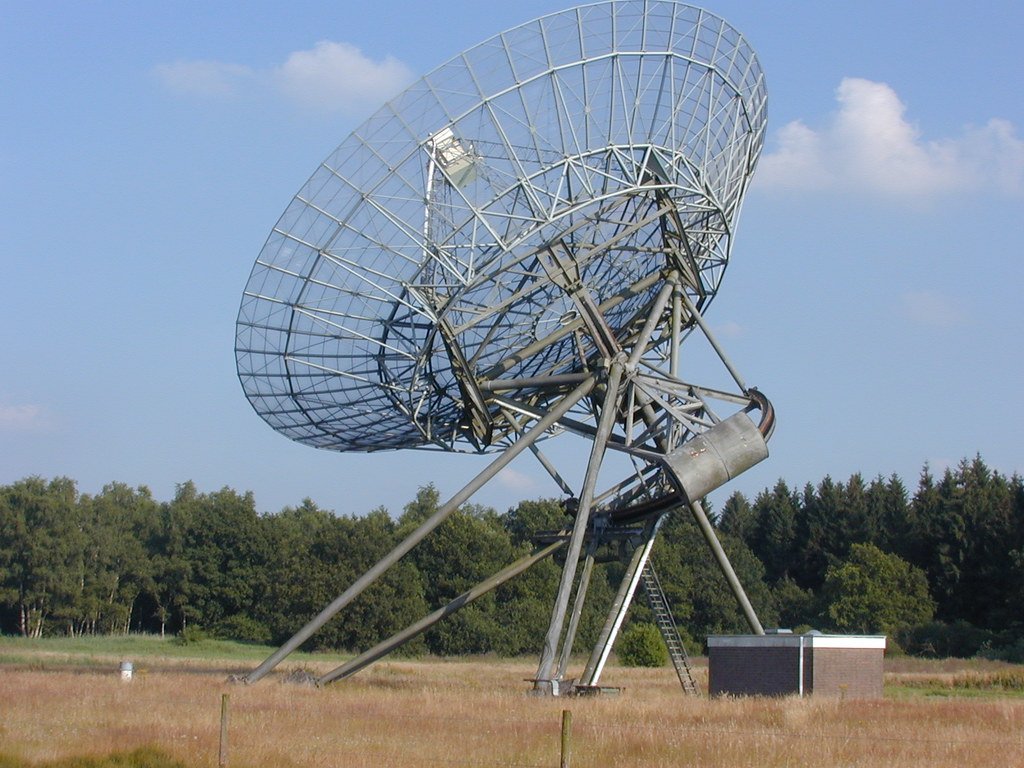
Despite decades of searching, no confirmed evidence of alien intelligence has been found. That’s an important baseline to keep in mind whenever a new “mysterious signal” surfaces in the press. Scientists used a powerful new data system to re-examine data from one million cosmic objects and still came up empty-handed.
SETI@home zeroed in on just 100 unexplained radio signals, each a puzzle piece in the sprawling search for extraterrestrial intelligence. According to two landmark papers published in 2025 in The Astronomical Journal, this culmination is the result of years of relentless data gathering, algorithmic refinement, and global collaboration. A hundred unexplained signals sounds exciting, until you appreciate the context: the vast majority are almost certainly mundane interference that hasn’t yet been pinned to a specific terrestrial source.
Since July 2025, the final 100 signals have been re-examined using China’s Five-hundred-meter Aperture Spherical Telescope, known as FAST. After the Arecibo Observatory’s collapse in 2020, FAST stands as the world’s only facility capable of following up on these kinds of observations. The process is methodical, slow, and appropriately humble.
Why This Narrative Endures: The Science Behind the Speculation
The idea of a signal from the Great Attractor taps into something real in how humans process uncertainty. A massive, partially hidden structure toward which our galaxy is moving, combined with recurring pulses arriving from deep space, produces a compelling story almost automatically. The ingredients are genuinely mysterious. The conclusions, however, have to be earned.
With high-resolution radio observations, researchers found that some signals thought to be from Dyson spheres were actually caused by background active galactic nuclei or dust-obscured galaxies. While this rules out some candidates, six remain under investigation. The findings highlight the importance of multi-wavelength analysis in distinguishing artificial structures from natural cosmic sources. This is science working as it should: checking, cross-referencing, eliminating the mundane before entertaining the extraordinary.
The Great Attractor forms the central basin of the Laniakea Supercluster, influencing over 100,000 galaxies including the Milky Way. This pull arises from clustered galaxies and dark matter, creating a cosmic sink amid universal expansion. It’s a gravitational structure, not a transmitter. Still, its scale and its obscured position guarantee it will remain a canvas for imagination, even as researchers quietly continue the much harder work of ruling out the natural explanations one by one.
The Broader Takeaway: Signal vs. Noise at Cosmic Scale
When astronomers talk about searching for signals, they’re describing a genuinely difficult filtering problem. The universe is extraordinarily active. Since October 2021, the CHIME/FRB Virtual Observatory Event Service has been issuing low-latency public alerts, broadcasting approximately two CHIME/FRB detections per day. These alerts are typically transmitted within 10 to 15 seconds of detection. Two new bursts per day, every day, from random directions across the sky. Most of them are almost certainly magnetars.
While neutron stars are likely responsible for many FRBs, a diversity of formation channels and possibly progenitor types may be needed to explain the full population. That caveat matters. “Mostly magnetars” still leaves room for genuine surprise, and that’s precisely why the monitoring continues. Science doesn’t work by assuming the simplest explanation is always correct; it works by testing until the data settles the question.
The IAA SETI Committee established a Task Group to re-examine the protocols in light of recent advances in search methodologies, the expansion of international participation in SETI, and the increasing complexity of the global information environment. The community is preparing carefully, not because a signal has been found, but because the tools are now sensitive enough that finding one has stopped being purely theoretical.
The most honest conclusion, as of 2026, is that the recurring pulses associated with the Great Attractor’s general direction are almost certainly natural in origin. The science points clearly at magnetars, colliding galaxies, and the ordinary violence of the deep cosmos. What keeps researchers watching isn’t wishful thinking; it’s the quiet recognition that in a universe this large, the cost of not watching is simply too high.