


Every American schoolchild learns the phrase “the rockets’ red glare.” It has been sung at ballparks and battlefields for generations, embedded so deeply into national consciousness that almost nobody stops to ask a simple question: were those rockets actually red? The chemistry of combustion, the known composition of the propellants used in 1814, and the physics of flame color all point in a different and surprising direction.
As the Smithsonian has noted, producing a true “red glare” from those rockets was actually unlikely. What really lit up the sky over Fort McHenry that September night was something far more interesting, and far more telling about what science can reveal through historical evidence.
The Night That Launched a National Anthem

The most famous legacy of the Congreve rockets came during the War of 1812, when they created what became immortalized as “The Rockets’ Red Glare.” For 25 hours, barrages of Congreve rockets were fired from the British ship Erebus against the American defenders of Fort McHenry in Baltimore, Maryland, on September 13 and 14, 1814.
Watching the battle from one of the British ships was an American lawyer named Francis Scott Key. Key had approached the British fleet before the battle under a flag of truce to negotiate the release of a prisoner. Held on board overnight, he witnessed the entire bombardment from a unique vantage point, unable to do anything but watch.
The morning of September 14, 1814, found Francis Scott Key peering anxiously from the small ship Minden, eight miles down the Patapsco River, into Baltimore Harbor and Fort McHenry, which had been under British naval bombardment for the last twenty-seven hours. Seeing the flag still waving and the fort untaken inspired Key to write the poem that would eventually become the national anthem. What he called “the rockets’ red glare” became, quite literally, a founding image of American identity.
Who Built the Rockets, and Where They Came From

The British military had encountered rocket artillery as an effective weapon of modern warfare in southern India in the late 18th century, when the rockets were used against them by the forces of Tipu Sultan. In 1804, the English inventor William Congreve heard the stories of Tipu Sultan’s rocket brigades and set out to build rocket weapons for the British military.
Things changed in the late 1700s when the Mysore Kingdom of southern India went to war with the British East India Company. Mysoreans packed iron tubes with combustibles, creating more thrust than the lightweight bamboo fire arrows of yore. These new rockets could travel up to one thousand yards.
The Company shipped captured Mysorean projectiles to Britain, where armorer Sir William Congreve copied their features, producing what came to be called Congreve rockets. The British added different weighting and materials, doubling or even tripling the range. The weapon that Francis Scott Key witnessed, in other words, had roots far older and far more global than most people realize.
The Ship That Fired the Rockets: HMS Erebus

It was Congreve’s second rocket-firing ship, HMS Erebus, under the command of Captain David Ewen Bartholomew, that was sent against Fort McHenry. The Erebus was a converted 18- or 21-gun sloop.
The ship’s logbook, which still exists, reveals that in April 1814, before setting sail to America, Congreve himself came aboard to inspect the rocket “scuttles,” square openings for launching rockets, with ten on each side of the ship below the main deck. Each rocket could be aimed up to a 55-degree angle, because Congreve found that the angle that offered the maximum range lay between 50 and 55 degrees.
During the battle, the Erebus fired hundreds of rockets from a distance of over 3,000 yards, although only a small percentage of them reached the fort. Despite the heavy bombardment, just four of Fort McHenry’s defenders were killed, the fort suffered only minimal damage, and the British were unable to capture Baltimore.
The Exact Formula: What Was Inside Each Rocket

Congreve Rockets were made up of an iron case containing black powder, which was similar to gunpowder in that it was made from sulphur, saltpetre, and charcoal, but in different quantities. The black powder would be ignited via a fuse, which would provide the propulsion for the rocket.
The British Congreve rockets specifically used 62.4% saltpeter, 23.2% charcoal, and 14.4% sulfur, a formula that differed meaningfully from standard British military gunpowder. That higher charcoal content is a detail that matters enormously for understanding flame color, as we will see.
A 3.5-inch-diameter 32-pounder was the most favored size and the kind fired against Fort McHenry on September 13 and 14, 1814. It carried seven pounds of incendiary mixture. The hollow warheads of the Erebus’s rockets were packed solid with combustibles, saltpeter, pitch, sulfur, and corned powder. So the rockets were burning not just one material but a layered chemical cocktail.
The Mathematics of Flame Color: Why Chemistry Rules the Spectrum

The heat given off by a combustion reaction causes electrons in metal atoms to be excited to higher energy levels. These excited states are unstable, so the electron quickly returns to its original energy, or ground state, emitting excess energy as light. The color of that light is governed by precise quantum mechanics, not by anything poetic or perceived.
The colors in fireworks stem from a wide variety of metal compounds, particularly metal salts. Red flames in modern pyrotechnics require the deliberate addition of specific compounds, most commonly strontium salts. True red sits at roughly 620 to 750 nanometers on the electromagnetic spectrum. Producing it is not an accident; it requires a particular metal element intentionally introduced into the combustion mixture.
The Congreve propellant formula contained no strontium, no lithium, and no other red-producing metallic salts. What it contained in abundance was charcoal, sulfur, and potassium nitrate. Those elements, burning together at high temperature, produce something quite different from red. The mathematical physics of their emission spectra point toward orange, yellow, and traces of green, depending on temperature and completeness of combustion.
What Burning Gunpowder Actually Looks Like
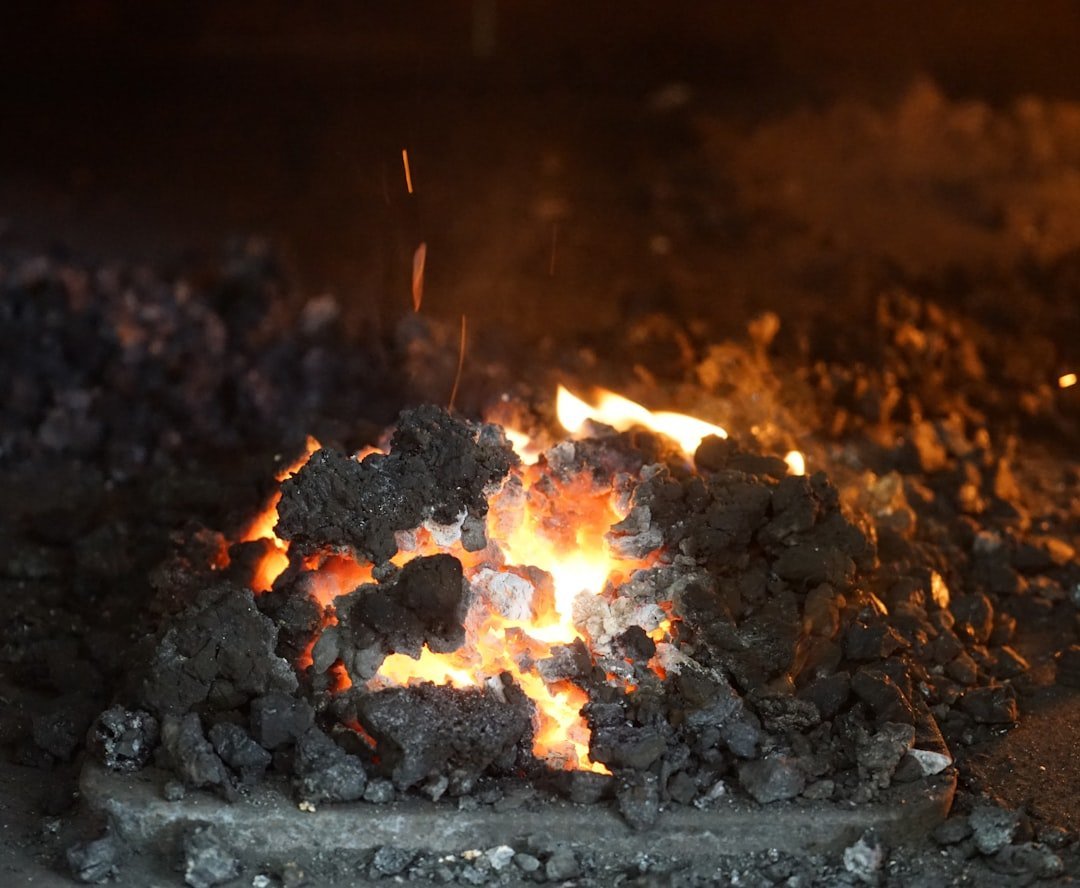
Gunpowder, commonly referred to as black powder, is the earliest known chemical explosive. It consists of a mixture of sulfur, charcoal, and potassium nitrate. The sulfur and charcoal act as fuels, while the saltpeter is an oxidizer.
When this mixture burns, the primary visible emissions come from incandescent carbon particles and from potassium flame emission lines. Potassium burns with a characteristic violet-pink hue, while glowing carbon particles in incomplete combustion emit a yellow-orange glow. The higher the charcoal content relative to saltpeter, the more incomplete and sooty the combustion, shifting the visible color toward orange and producing heavy gray smoke.
As for producing a “red glare,” that was unlikely. As the rockets snaked toward their targets, they emitted gray smoke trails, and their exhaust flames – orange, not red – were almost certainly not visible from a distance. This assessment comes from Frank Winter, former curator of rocketry at the National Air and Space Museum, and it aligns directly with the chemistry of the known propellant.
Where Does Green Enter the Picture?
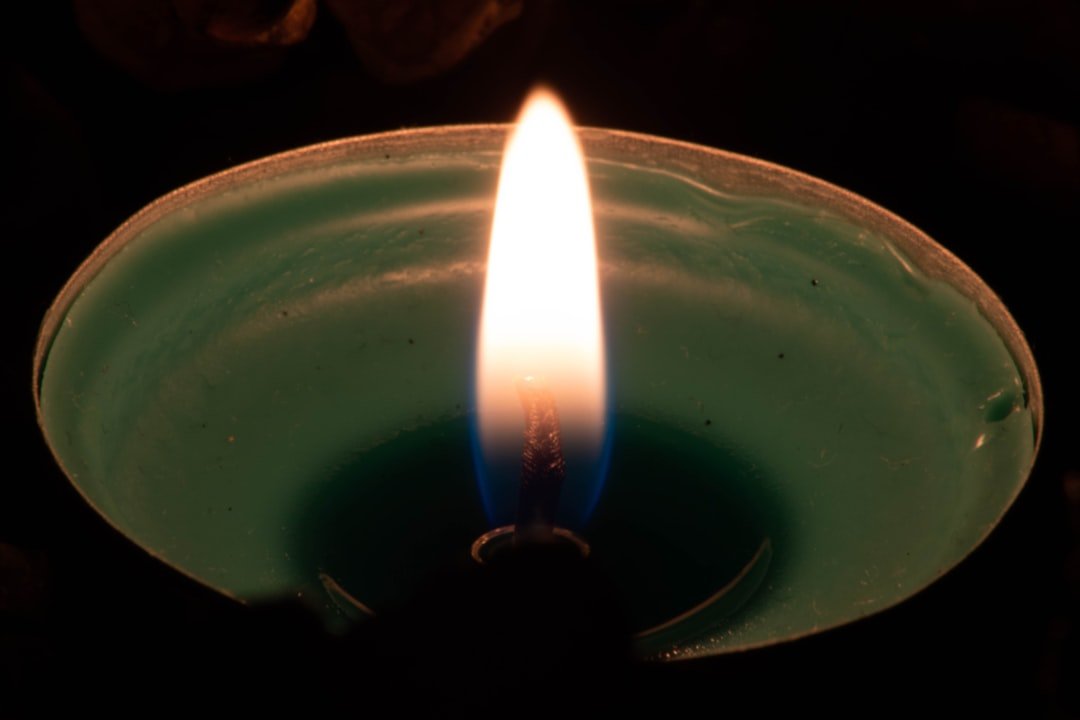
The Erebus rockets were firing incendiary warheads, and the hollow warheads were packed solid with combustibles including saltpeter, pitch, and sulphur. Sulfur combustion produces sulfur dioxide and, under certain conditions, green-tinged emission spectra. Pitch, a carbon-heavy tar compound, burns with complex emission colors that shift depending on temperature.
More critically, the high charcoal content in the Congreve formulation meant the combustion was frequently incomplete, generating carbon monoxide as an intermediate. The interaction between carbon compounds and atmospheric oxygen at varying temperatures creates a flame color that tends toward yellow-green rather than red. Spectroscopy tells us the dominant visible emissions from a burning potassium-rich, high-carbon mixture include lines in the green and yellow-green range of the visible spectrum.
The incendiary mixture inside the warhead added further complexity. Combustion temperatures, burn rates, and the presence of metallic iron from the casing all interact with the flame photons that are ultimately visible to an observer. The mathematical sum of these interactions produces a flame that chemistry, not sentiment, describes as closer to greenish-orange than scarlet red.
The Scale of the Bombardment: Numbers That Matter

Captain Bartholomew attempted to deluge the fort, and between 600 and 700 rockets were fired over the 25-hour assault. That is not a single streak of light; it is nearly continuous illumination across a wide arc of sky. For a witness positioned miles away on a dark harbor, the visual impression would have been dominated by the smoke plumes as much as by the actual flame.
These rockets were notoriously inaccurate, owing to the instability of their long guiding sticks and the uneven burning of their gunpowder propellant. That uneven burning is significant: it means the combustion was erratic and incomplete, which, combined with the high charcoal content of the Congreve propellant formula, would have produced variable and often muted flame colors rather than a clean, consistent red glow.
Throughout the nearly three years of war, Congreve’s rockets were known to have killed only three people, but they had a major impact on the future of warfare. Their power was psychological as much as physical, and what Key perceived as “red” may well have been the mind’s attempt to interpret a chaotic, terrifying spectacle through the most vivid color language available to him.
Francis Scott Key’s Perception vs. Optical Reality

Key was not a scientist. He was a lawyer watching an overwhelming bombardment at night, from miles away, on a ship he could not leave. Human color perception under low-light conditions is notoriously unreliable. The rods in human eyes, which dominate vision in darkness, are essentially colorblind. Only the cones register color, and they require reasonable light levels to do so accurately.
At the distance Key was watching, he would have been detecting the brightest portions of the overall fire and smoke cloud, not the precise spectral output of each rocket’s propellant. A yellow-orange to green-tinged combustion plume, viewed from miles away at night and filtered through gray smoke, could very plausibly register in human perception as reddish or simply as a “glare” without a precisely determined hue. Key used the word red, but he was writing a poem, not a laboratory report.
The attack was witnessed by Francis Scott Key, a young American lawyer who mentioned the “rockets’ red glare” in his poem, “The Star-Spangled Banner,” that soon became a patriotic song. The word “red” was as much a literary choice for urgency and drama as it was a precise color observation. History, chemistry, and optics all suggest the actual combustion color was more complex and more muted than that single word implies.
The Legacy of the Congreve Rocket in Science and Warfare
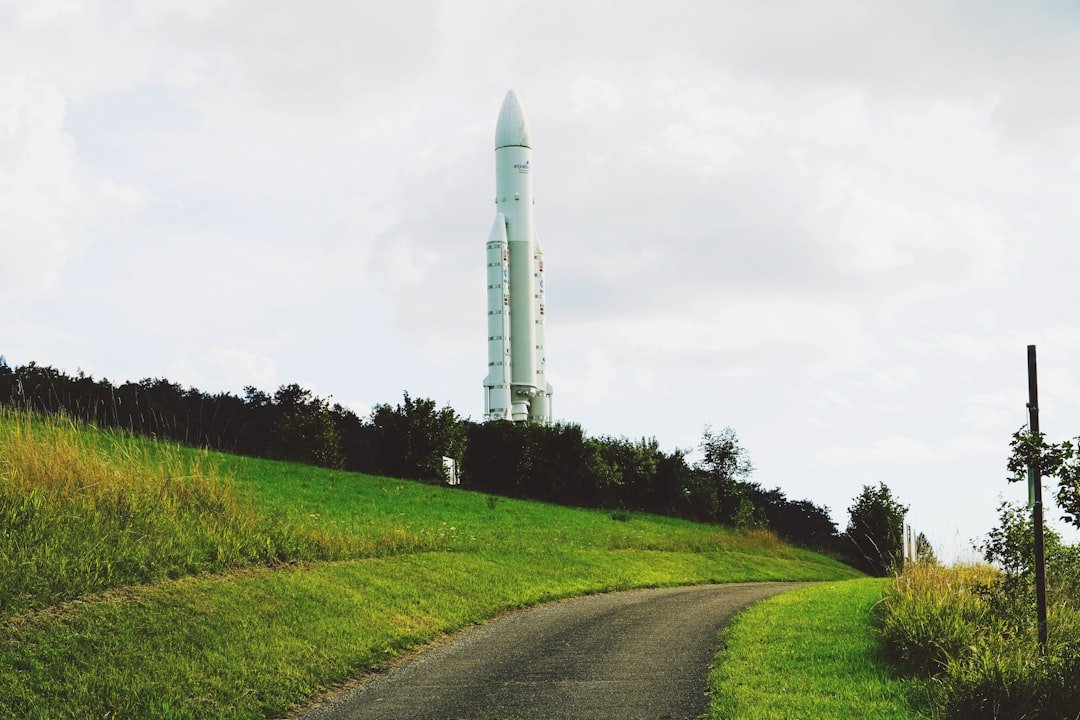
After the rockets were introduced by the British, dozens of other countries formed their own rocket troops and rocket establishments. The technology that lit up Fort McHenry in 1814 became the template for military rocketry across the 19th century and, through a long chain of development, contributed to the principles that underpin modern solid-fuel rocketry.
Congreve attempted to correct his design’s defects through a series of refinements, adjusting exhaust apertures, experimenting with different stick lengths, and developing launch frames. He established formal manufacturing procedures, calibrating each rocket’s casing and fuse for consistency, and created a classification system that allowed for logistical coordination in the field. This systematic engineering approach made Congreve one of the earliest figures to treat rocketry as an industrial science rather than an art.
Rocket propellant chemistry has evolved from medieval gunpowder mixtures to modern high-performance fuels. Early rockets used simple black powder in bamboo tubes, but today’s launch vehicles rely on advanced liquid and solid propellants and even emerging green and electric options. The direct line from the Congreve formula to modern propellant chemistry is not metaphorical; it is measurable.
What the Anthem Got Wrong, and Why It Doesn’t Matter

The phrase “the rockets’ red glare” is arguably one of the most consequential twelve syllables in American cultural history. Yet the science tells us it was imprecise at best, and at worst a complete chromatic mismatch with what was actually burning in the sky. Orange, yellow, and green-tinged emissions from incomplete black powder combustion are what chemistry predicts. Red, the color of strontium or lithium flames, was simply not part of the formula.
Key’s words were later set to music by British composer John Stafford Smith, and in 1931 the combination was declared the national anthem of the United States. More than a century passed between the night of the bombardment and the moment the anthem became official law. The chemistry behind the line had always been a quiet question waiting to be asked.
None of this diminishes what Francis Scott Key witnessed or what the anthem means. It simply adds a layer of precision that history, chemistry, and mathematics together provide. The rockets over Fort McHenry burned with the colors their chemistry demanded: orange, smoky, and possibly green-tinged, not red. And somehow, that makes the story even more interesting than the one we sing.
Conclusion: Science Hiding in Plain Sight

There is something quietly remarkable about the fact that one of the most recognized lines in American culture contains a chemical error that has gone largely unexamined for over two centuries. The “rockets’ red glare” was likely closer to orange, yellow, and green, depending on combustion completeness, distance, and atmospheric conditions. The propellant formula, the physics of electron emission, and the accounts of the Smithsonian’s own rocketry historians all converge on this same conclusion.
That is not a reason to rewrite the anthem. It is a reason to appreciate how much precision is hiding inside even the most familiar historical moments. Francis Scott Key gave America a poem. Chemistry, quietly and without ceremony, gives that poem a footnote it has long deserved.