

There is a corner of the night sky that most people have never thought twice about. It sits quietly in the constellation of Cetus, the ancient Sea Monster, and it goes by an Arabic name that translates, rather ominously, as “the belly of the whale.” The star is called Baten Kaitos. Honestly, for centuries it was considered a footnote in the catalog of fixed stars. Suddenly, in April 2026, it finds itself at the center of one of the most talked-about celestial alignments of the decade.
What happens when several planets crowd into the same region of the sky as this historically troubled star, at the very same time a rare comet blazes nearby? The answer, depending on who you ask, is either a spectacular observational opportunity or something far more unnerving. Let’s dive in.
Meet Baten Kaitos: The Star at the Heart of It All
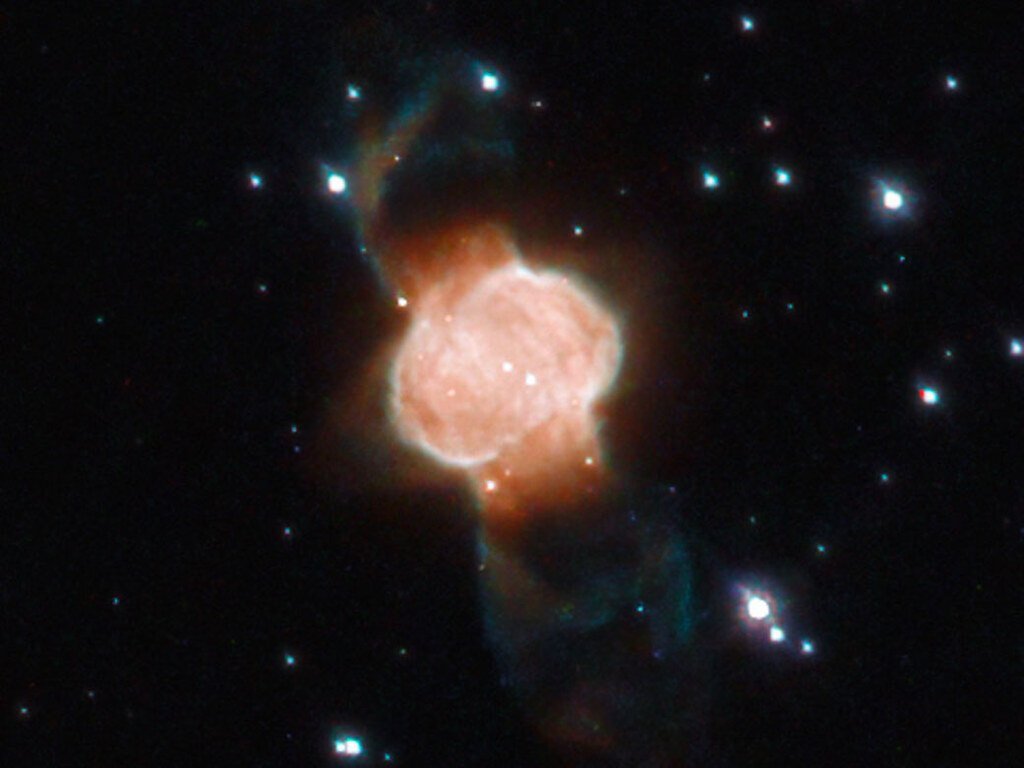
Baten Kaitos, formally designated Zeta Ceti, is a 4th magnitude spectroscopic binary star system located in the belly of the Sea Monster, Cetus constellation. It does not blaze like Sirius or command attention like Betelgeuse. It is, by most standards, a modest object. Yet its physical reality is actually quite impressive.
The primary component, Baten Kaitos, is an evolved K-type giant star with a stellar classification of K0 III Ba0.1. The suffix notation indicates this is a weak barium star, showing slightly stronger than normal lines of singly-ionized barium. This star has an estimated 2.34 times the mass of the Sun and, at an estimated age of 1.24 billion years, has expanded to 25 times the Sun’s radius.
Zeta Ceti is a single-lined spectroscopic binary system with an orbital period of 4.5 years and an eccentricity of 0.59. So even the star itself has an unusual, elongated internal rhythm. Think of it like a long elliptical orbit, asymmetric and restless, not the neat circular dance we might prefer.
Where Exactly Is It, and How Far Away?

The system has a combined apparent visual magnitude of 3.74, which is bright enough to be seen with the naked eye as a point of light. Based upon parallax measurements, it is approximately 253 light-years distant from the Earth. That is a long way. The light you see when you look at Baten Kaitos tonight left the star sometime in the late 1700s.
Based on the location of Cetus, Baten Kaitos can be located in the equatorial region of the celestial sky. Being in the equatorial region, Baten Kaitos can be seen in both terrestrial hemispheres, depending on how far south and north you are. It is also, crucially, south of the Ecliptic, which is the path that the planets follow across our sky. That last detail matters a great deal to what is happening this April.
Baten Kaitos luminosity figure of 209.365 comes from the Vizier online catalogue. The star generates more energy than our star. Baten Kaitos radius has been calculated as being 23.98 times bigger than the Sun. That is not a small object hiding out there in the dark.
The Ancient Name and What It Carried With It
The name Baten Kaitos is derived from the Arabic بطن قيطس batn qaytus, meaning “belly of the sea monster.” Ancient sky watchers were not just naming stars for fun. The names they gave carried warnings and associations passed down through generations of sky watching. Baten Kaitos was no exception.
In classical tradition, this star was said to give compulsory transportation, change or emigration, misfortune by force or accident, and shipwreck, but also rescue, falls and blows. The rescue part is often left out of the dramatic retellings, which is a shame. The full picture is more nuanced. Still, the weight of that history is hard to ignore.
The star itself has historically been associated with exile, forced change, and movement away from comfort zones, akin to being “swallowed by the whale” in mythological narratives. This symbolizes a transformative journey, often involving solitude or sacrifice. There is something almost poetic about that framing. Not destruction, but transformation.
The April 2026 Planetary Alignment in Cetus: What Is Actually Happening
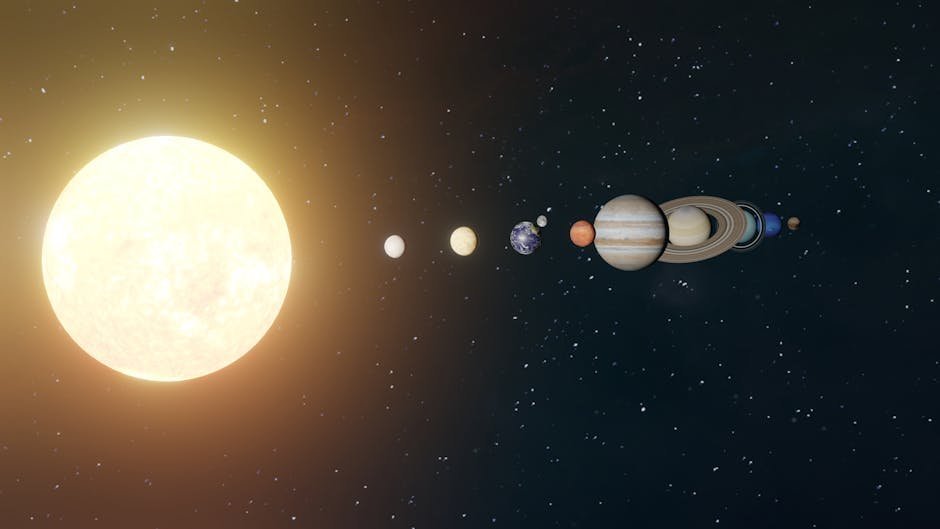
Here is where things get genuinely remarkable from a scientific standpoint. This is not mythology anymore. This is real, observable, measurable astronomy. A series of planetary conjunctions will make Mercury, Mars, Saturn, and Neptune appear close together in the sky for several days in April 2026.
On April 19 and 20, Mars will appear close to Saturn in the sky. The two planets will be located in the constellation Cetus, near the border with Pisces. Another planet, Mercury, will also be shining near Saturn. That is three planets gathered in and around the same patch of sky as Baten Kaitos simultaneously.
On April 20, Saturn, Mars, and Mercury appear very close together and form a straight line that spans only about 1.6 degrees, roughly the width of three Full Moons placed side by side. I think it is hard to overstate how compact and visually striking that is. Three worlds, lined up, in the belly of the whale.
Saturn’s Long Dance Through Cetus
It is not just a one-night affair. Saturn has been spending extended time in this neighborhood. Neptune and Saturn in Pisces and Cetus make their debuts in the pre-dawn sky after the 7th of April. Saturn is not just passing through quickly. It is settling into the area for a while, like a houseguest who has no immediate plans to leave.
Saturn is at its best in early October and can be found in the constellation Cetus. Look for it about 90 minutes after sunset; it will be low in the east and will appear as a solitary, pale-yellow “star” with a steady glow. By October, Saturn reaches opposition in Cetus, making 2026 a remarkable year for this ringed planet’s presence in this particular constellation.
Let’s be real: the fact that Saturn, historically the planet most associated with restriction and challenge, is the anchor planet in this alignment is not lost on observers who take the symbolic dimension of astronomy seriously. Whether or not you believe in those associations, the physical reality of these conjunctions in Cetus remains extraordinary.
The Comet Wild Card: C/2025 R3 Crashes the Party
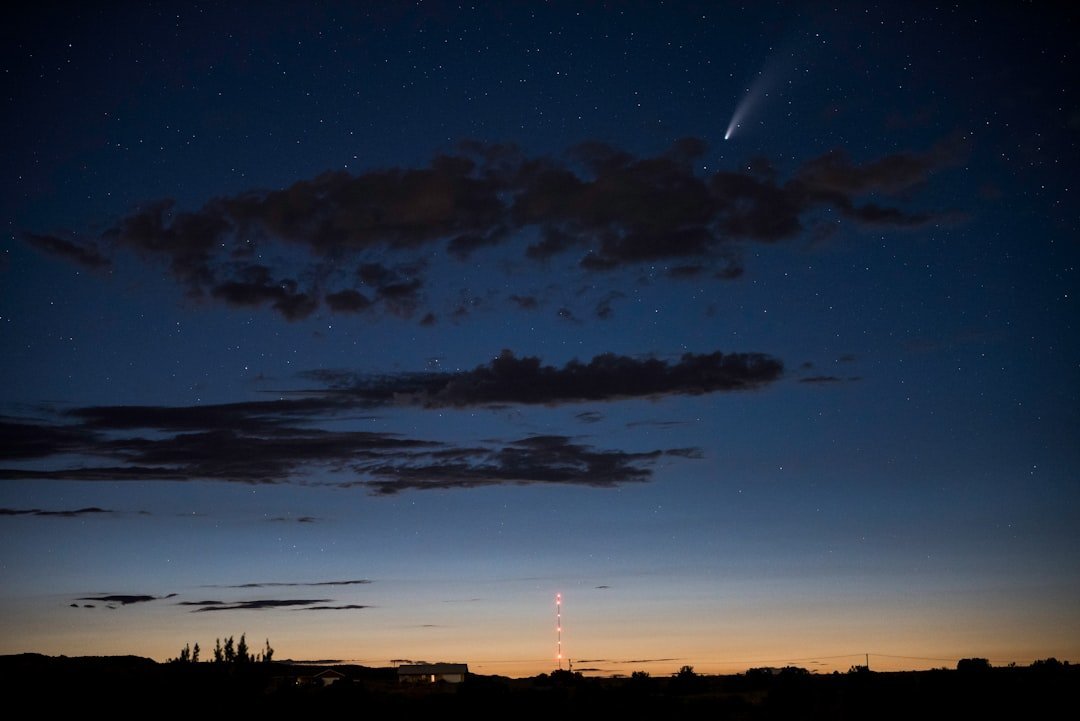
As if four planets clustering near Baten Kaitos were not enough, April 2026 adds a comet to the mix. On April 25, Comet C/2025 R3 moves into Cetus. By then, it lies very close to the Sun in the sky, making it difficult to observe. So the comet literally moves into the same constellation during the peak of all this planetary activity.
After perihelion on April 19, the comet may brighten to about magnitude 2.8. That alone would make it a promising naked-eye comet. But if it really puts on a show, it could reach magnitude -1.0 and rival the planets in brightness. Comets in ancient tradition were almost universally interpreted as omens. Modern astronomers study them for clues about the solar system’s formation. Either way, their arrival in a already-crowded and symbolically loaded region of sky is enough to make you look twice.
To the east, skywatchers may also spot Mercury, Mars, Saturn, and Neptune gathered in a 4-planet parade, all visible near the comet’s path around the same window of time. It is an exceptionally busy neighborhood for late April.
The Viewing Challenge: Why It Is So Hard to Actually See
Here is the frustrating part for skywatchers. Around April 18, Saturn, Mars, Mercury, and Neptune will gather in a small patch of sky spanning only about 4 degrees. This alignment will be challenging to observe because the planets sit very close to the Sun. Your best chance is to look low above the eastern horizon roughly an hour before sunrise. Observers in the Southern Hemisphere will have the advantage, as the planets rise a bit higher while the sky is still darker.
This alignment is much better positioned in the Southern Hemisphere and becomes quite difficult to observe above approximately 30 degrees North. Neptune reached solar conjunction on March 23, 2026, and Saturn on March 26, 2026, so by mid-April they’re still appearing close to the Sun in the sky and are seen in bright pre-sunrise twilight. That is the astronomy world’s equivalent of a sold-out concert being held in a room with terrible acoustics.
Mercury, Mars, and Saturn should be visible to the naked eye under good conditions. Neptune is the hardest of the four – it’s too faint to see without binoculars or a telescope. Since the whole lineup appears low in the brightening dawn sky, be careful not to point your optics at the Sun.
A Star With a Documented History of Appearing at Disasters

This is the part that makes the astronomical community genuinely uneasy, not because scientists believe in astrological causation, but because patterns in recorded history are worth examining. Baten Kaitos was at the North lunar node at the Titanic disaster, and shows up in many shipwreck charts. Researchers who study fixed star correlations have noted this repeatedly.
Baten Kaitos is a stormy star, known for shipwrecks, possibly with rescue, and drowning. The word “stormy” here is not purely metaphorical. In historical sky catalogues going back centuries, this star was consistently flagged as associated with chaotic, turbulent events. It’s hard to say for sure what that means scientifically, but the pattern is documented.
With Baten Kaitos, there will be at least one instance in the life where the person will have to deal with a shocking, staggering displacement and have to somehow find a way to restart his or her life. This kind of language has been attached to this star across multiple cultural traditions, independently. That consistency, at minimum, is curious.
The Cetus Constellation: A Stage Bigger Than Most People Realize
Cetus is not just some minor backdrop. Cetus is one of the official International Astronomical Union listed 88 modern constellations and is listed as the 4th largest constellation overall, filling around nearly 3 percent of the night sky. That is a massive canvas. Most people have never even heard of it, which is honestly a shame for one of the sky’s great mythological beasts.
Cetus represents the sea monster or whale sent by Neptune to devour Andromeda. This myth connects directly to one of the most dramatic stories in Greek mythology, involving sacrifice, heroism, and rescue. The entire constellation complex of Perseus, Andromeda, and Cetus is essentially one interlocking cosmic narrative frozen in the sky.
Baten Kaitos can be used to find several relatively bright galaxies that lie in the vicinity of the star. These include the spiral galaxies NGC 701, IC 1738, NGC 681 (the Little Sombrero Galaxy), and others which form the NGC 681 Group. Even the deep sky objects nearby carry names that evoke sunken, submerged things. The Little Sombrero Galaxy. It is all strangely thematically coherent.
What Astronomers Are Actually Watching For
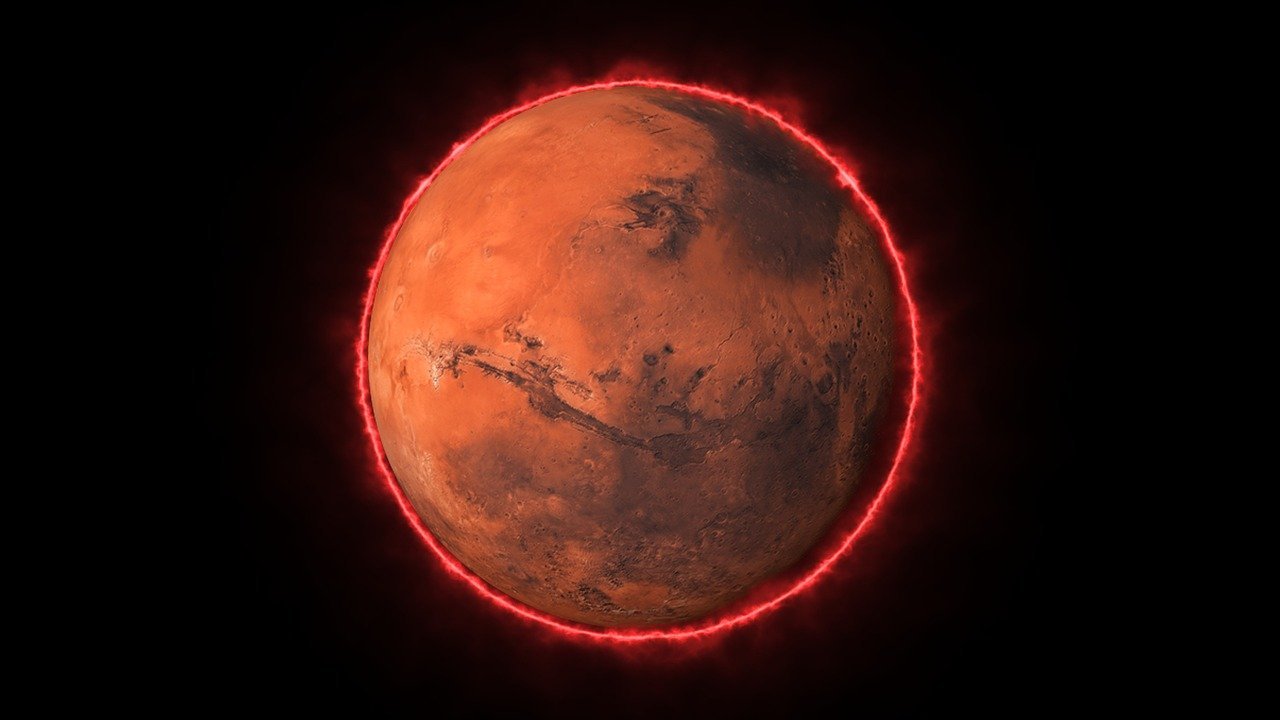
The unease among professional sky watchers in April 2026 is rooted in something more concrete than mythology. The next triple conjunction of Saturn and Neptune, a pairing that happens roughly once in a century for bright planets, is occurring in 2025 through 2026. That alone would make this a historically significant observational period. Adding Mars and Mercury to the mix within the same degree of sky as Baten Kaitos is genuinely unusual.
Of the six planetary conjunctions between April 13 and the 23rd, only that involving Venus and Uranus is available for nighttime viewing. The rest, which occur during the day, include Mars and Neptune on the 13th, Mercury and Neptune on the 16th, Mars and Saturn on the 19th, and on the 20th both Mercury and Saturn in the morning and Mercury and Mars in the evening. That is a concentration of planetary meetings within a single week that is remarkable by any measure.
April 2026 is unusually generous to comet watchers: at least three comets may be observable this month, depending on location and equipment. Two of them, C/2026 A1 (MAPS) and C/2025 R3 (PanSTARRS), may even become visible to the naked eye. Two naked-eye comets in the same month as a four-planet alignment near Baten Kaitos. It is a genuinely extraordinary sky.
Conclusion: The Belly of the Whale Is Open for Business
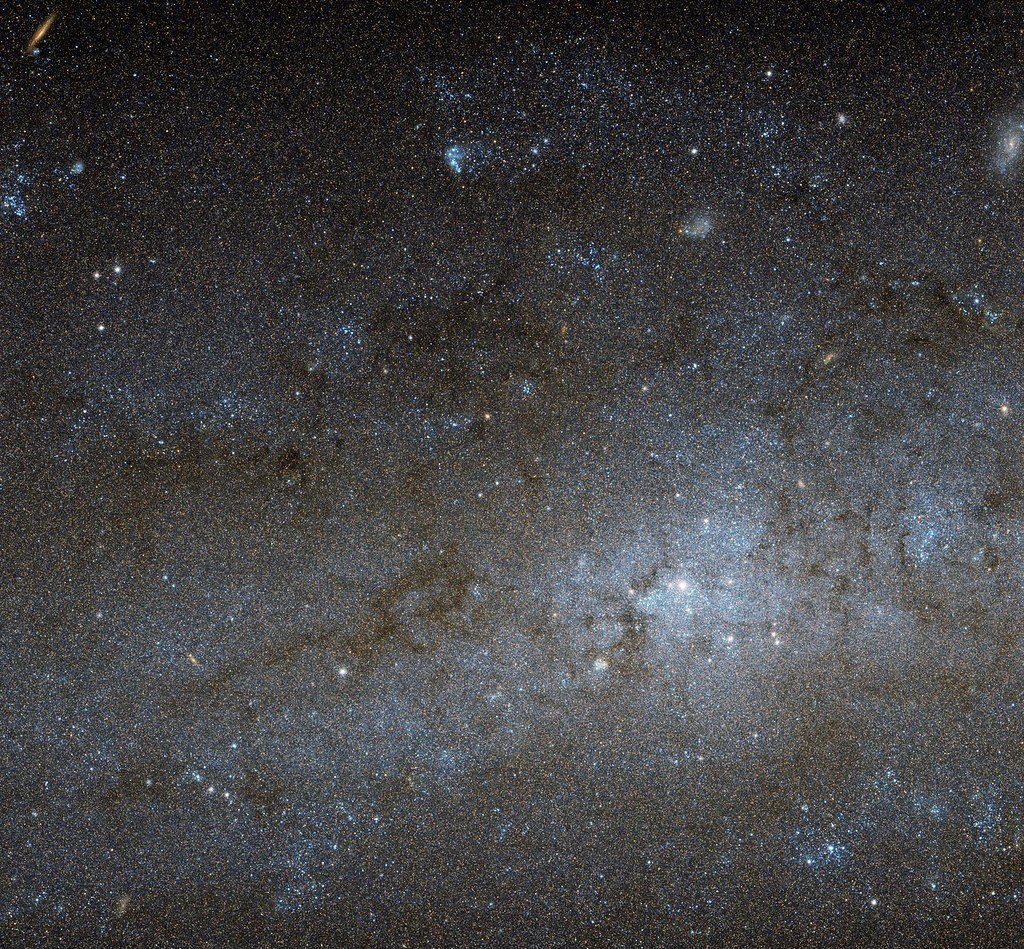
Whether you approach Baten Kaitos from a scientific lens, a historical one, or somewhere in the curious middle ground, April 2026 has delivered something genuinely rare. A 1.24-billion-year-old giant star, ancient enough to have formed when complex life on Earth was just beginning, now finds itself surrounded by planets, comets, and millennia of symbolic weight all at once.
The conjunction of a planet with Baten Kaitos in a natal chart indicates a life path marked by inner transformation, exile, and karmic challenges. While it can bring hardship or emotional distancing, it also fosters great spiritual maturity and resilience when embraced consciously. That framing, transformation rather than mere destruction, is perhaps the most honest reading of this moment.
The belly of the whale, as any reader of Jonah knows, is not the end of the story. It is the turning point. April 2026’s rare gathering in Cetus is either a spectacular coincidence of orbital mechanics or a reminder that the sky, as it has always done, reflects the complexity of the moment back down at us. What do you think – does the sky speak, or is it just geometry? Tell us in the comments.