

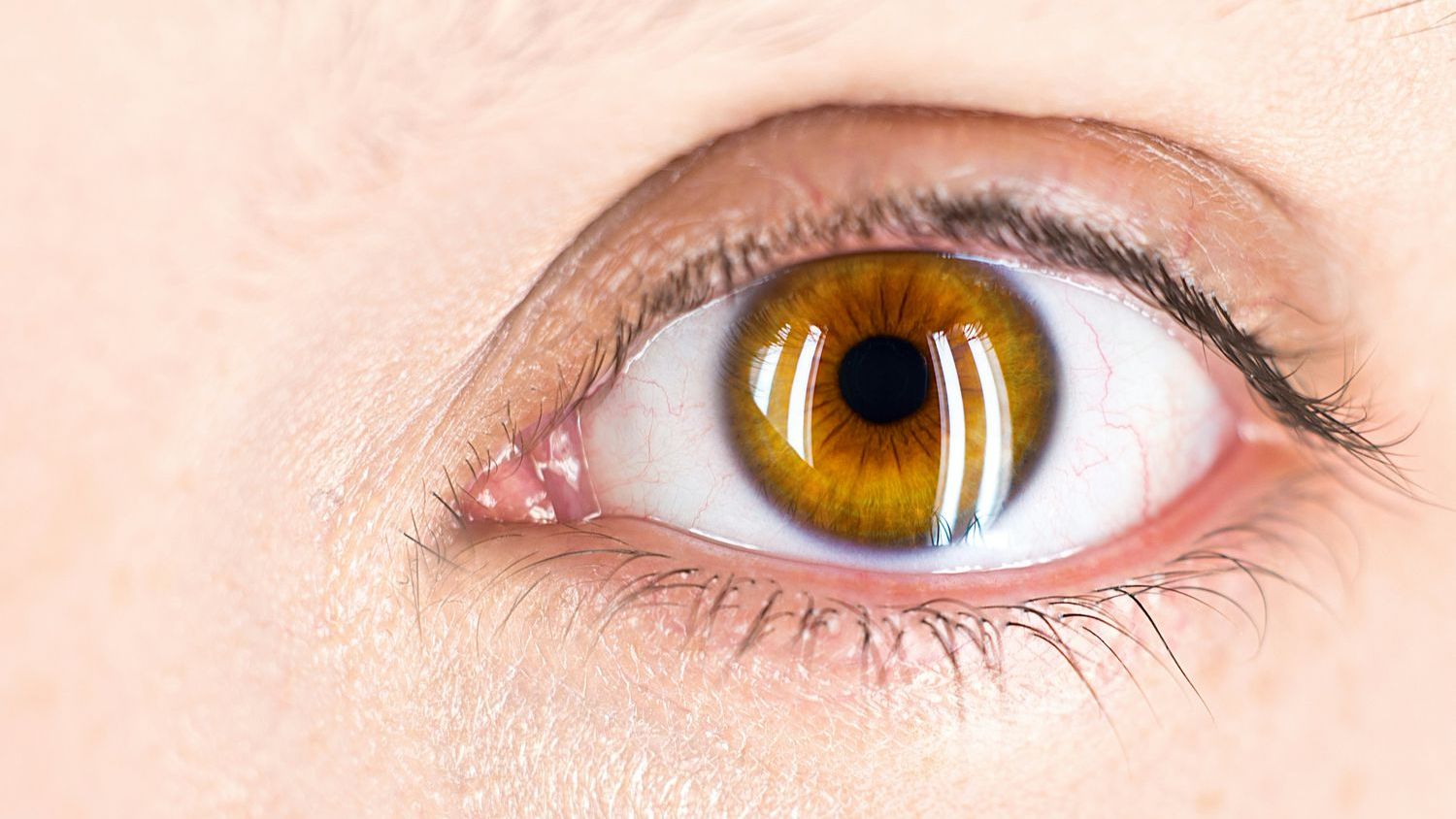
The human eye has a small blind spot where the optic nerve connects to the retina, and the only reason you don’t constantly see a hole in your visual field is that your brain is filling it in with educated guesses – meaning every moment of your visual experience is partly fabrication, and your conscious mind is the last to be informed. – Image for illustrative purposes only (Image credits: Unsplash)
Every human eye contains a small region with no light-sensing cells at all. This gap sits where the optic nerve exits the retina, yet most people go through life without ever detecting a hole in what they see. The reason lies in the brain’s constant, automatic work to complete the picture using information from the surrounding visual field.
The Structural Gap Created by the Optic Nerve
The optic nerve must pass through the retina to carry signals to the brain. In doing so, it displaces the photoreceptor cells that would otherwise occupy that space. The resulting area measures roughly seven and a half degrees tall and five and a half degrees wide, located about twelve to fifteen degrees to the side of the center of vision and slightly below the horizontal line. Because no light reaches this zone, it registers nothing at all. This feature appears in every vertebrate eye and is not considered a flaw in any single person. Medical descriptions refer to it as the physiological blind spot or punctum caecum. It exists simply because of how the retina is arranged, with the nerve fibers routed through the front rather than behind the light-sensitive layer.
How the Brain Completes the Missing Information
Faced with zero input from that region, the brain performs a rapid extrapolation based on the patterns around it. When a line crosses the blind spot, the brain extends the line so the visual field appears unbroken. The same process occurs with wallpaper patterns, solid colors, or even parts of a face: the brain supplies what it judges most likely to belong there. This filling-in happens in real time and without any conscious signal. The result is a continuous visual field that feels complete even though part of the data never reached the eye. In ordinary surroundings the guess usually matches reality because most scenes contain predictable repetitions and smooth transitions.
When the Brain’s Guess Does Not Match Reality
The process can produce an incorrect image when the actual content inside the blind spot differs from its surroundings. A small dot placed to fall exactly on the gap disappears from awareness and is replaced by the color or texture of the paper around it. The viewer experiences the edited version only and receives no internal warning that anything has been altered. Such demonstrations reveal that the conscious mind receives the finished reconstruction rather than the raw signals. The brain edits out the mismatch before awareness forms, leaving the person with the impression of direct, unaltered sight.
What This Reveals About Everyday Perception
The blind spot serves as a clear example of a larger pattern. Vision is not a simple recording of light that hits the retina. Instead, the brain interprets incomplete data, smooths over rapid eye movements, and constructs a stable three-dimensional scene from two slightly different two-dimensional views. The conscious experience is therefore the brain’s best estimate of the world rather than a direct copy of external reality. This active construction operates at every moment of waking life. The visual system supplies no internal marker to distinguish between parts based on actual input and parts based on educated inference. As a result, the standard sense that one is simply “seeing” the world remains unchallenged until an outside demonstration, such as a simple dot on paper, makes the gap visible. The blind spot therefore shows that perception involves ongoing fabrication performed below the level of awareness. The conscious mind remains the last to learn which portions of its experience rest on direct sensory evidence and which rest on the brain’s ongoing adjustments.